
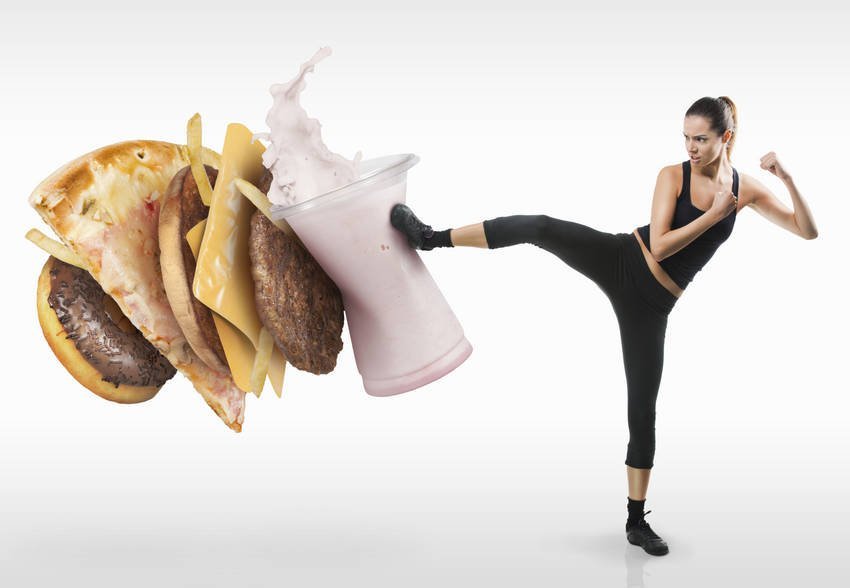
To lose weight and keep it off, following a restrictive diet is usually not the most effective approach. Instead, by adopting a better quality of life, healthy habits, and, above all, dispelling false beliefs, it will be easier to get rid of excess weight (and not regain it). Here we present a list of ten options for you to gradually put into practice.
1. Ditch the diets
Chronic dieters fail over time because, as they go through constant states of hunger, the body activates a conservation mechanism, and the obesity phenotype manifests itself. This can lead to a change in metabolism and make weight loss more difficult.
The main recommendation is to gradually replace junk food, with its empty calories and excess sugars, sodium, saturated fats and additives (which only increase appetite and thirst), with healthy and nutritious foods. Other effective measures: Gradually reduce portion sizes and snacking, thereby adjusting the capacity of our stomach. Always with a weekly indulgence.
2. Take care of your digestion
Simply by tasting, smelling, and visualizing the food on the plate, chewing it well and breaking it down with our saliva, the first step of digestion would be completed, somehow satisfying what we would call brain hunger. Then, the stomach and intestines would receive the contents ready to absorb and distribute the nutrients. It is also important to stick to the schedule for the four basic meals.
3. Slow down
Cortisol is a hormone linked to stress and also to weight gain. Therefore, it must be kept under control. To do so, it is essential to engage in physical activity, which also helps to raise the blood level of endorphins (a hormone related to pleasure), reducing fatty tissue. This would put us in a good mood and make us less likely to get sick.
4. Choose your foods consciously
A good way to change habits is to start choosing foods for pleasure and not out of obligation. Not by forbidding yourself, but by changing, to feel satisfied without overeating. For example, 75 grams of French fries (a small cone) have 200 empty calories and are equivalent to 600 grams of broccoli, which are more satiating and provide important nutrients.
5. Try to identify what caused you to gain weight
Weight gain may be linked to episodes of stress or depression. A good strategy is to visualize what caused the change in our metabolism, so that we can intervene, if necessary, on neurotransmitters such as serotonin and norepinephrine, which increase and create a vicious cycle in the body.
6. Stay hydrated
Fatty tissue retains fluid and toxins. So, consuming plenty of water, fruits, and vegetables helps eliminate bodily waste.
7. Move, baby, move
Even though our brain and our joints probably “don't want to,” do everything you can to overcome this barrier. The lack of desire to be active is usually a “logical” denial. Therefore, it is important to find an activity that we enjoy and that gives us pleasure. After a few weeks, when our brain starts to release endorphins, let's look for something a little more suitable for burning fat and toning muscle, without causing damage to the joints.
8. Don't steal hours from rest and relaxation
Un sueño reparador hace que nuestro cuerpo consuma las calorías necesarias. Además, al descansar nuestras funciones cerebrales, nuestro cuerpo amanecerá renovado y listo para la actividad diaria.
9. Think long term
There is one key recommendation: the changes achieved, slow but steady, are leading us toward better health and stability. Changing habits also reduces the likelihood of weight regain, one of the typical problems of overly restrictive diets.
10. Get professional help
The support of an interdisciplinary team will help you achieve your goals and provide support in times of weakness.
By Dr. Gabriela Tortolo,
Clinician and specialist in obesity and metabolic syndrome,
from the staff of La Posada del Qenti
Sources: Clarin.com


What great tips! The important thing is to put them into practice.
Well, it should be shared, especially with young people and older people who don't know why they're gaining weight.
Really good tips!!! Now we have to try them!!
Good morning. Is there a treatment that does not involve hospitalization for a 12-year-old boy?
I can attest that it is as Dr. Gabriela says, and I also checked it in Qenti. Thanks for reminding us. These suggestions are never excessive. Best regards.
It's good that this is shared, especially for young people and older ones who don't know why they gain weight later...
Excellent recommendations!!!!! Over time, age and lack of physical activity, plus fast food due to difficult work schedules… the perfect combination!!! The scale gives you the results…recalculating…you need help to start changing to healthy habits.
It's hard, but you have to set yourself the goal of changing.