
Isolated but hyperconnected. This is how we spend all day at home, with our cell phones at hand, working from home full time, and experiencing social life through a screen. In this article, we present a “user manual” for the healthy use of technology, with key points and tips from a specialist.

Humans are social beings and we need to interact in some way to survive, or rather, to exist.
Since preventive isolation is mainly based on reducing physical contact between people and preventing the spread of the COVID-19 virus, we are looking for ways to continue interacting while avoiding physical contact.
We have made the use of technology second nature with relative speed and ease, adapting to the reality we are facing and accepting this new way of connecting virtually.
This is how engineer and coach Miguel Cané, General Manager of La Posada del Qenti, a pioneering Medical Wellness Center in Argentina for Personalized Treatments for Habit Change, begins his exclusive column for Para Ti.
The cell phone, the new virtual mask
We read the news online on our phones, we work on our computers, we shop online, we chat with our loved ones by video call, and we even celebrate birthdays via videoconference. Today, technology has become an ally.
The cell phone has become an essential item. In fact, 80% of people in the world own one. It's even more important than personal hygiene, since only 70% have access to a toothbrush (source: Jorge Seoane, SAP BDM Mobil).
Before the start of the pandemic, these devices were used for an average of 5 hours a day, with users checking them an average of 110 times a day. Today, it is estimated that, due to isolation, this has increased by more than 60%.
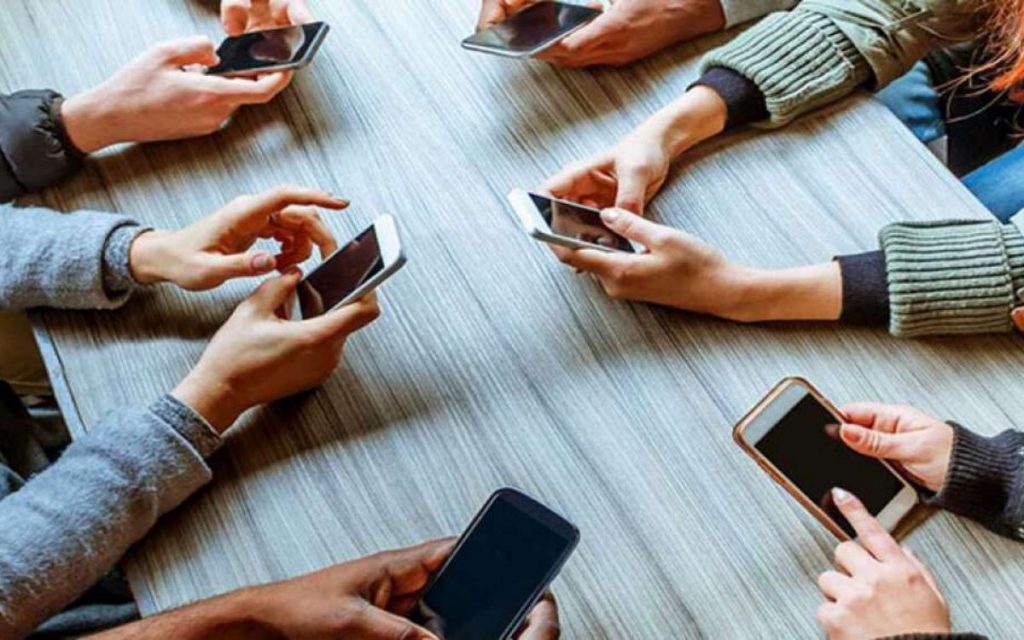
The phone screen has become a window through which we can connect with the world, beyond the walls of lockdown and without the risk of infection.
Today, the cell phone is the new virtual mask. This new way of communicating through voice messages, videos, photos, and emojis is replacing our authentic way of interacting.
A kiss became an emoticon, a greeting turned into a timeless audio message, and a beautiful sunset became a photo. In the age of memes, the pandemic digitized our emotions.
24-hour WhatsApp messaging
Adults typically send more than 50 WhatsApp messages per day, while teenagers send much more than twice that number. This has increased by up to 120%, because today almost all of our communication takes place through technological means.
Our need to connect and feel led scientists to suggest the practice of virtual sex to replace physical, loving contact.
The dangers of techno-dependence
What was once a technological breakthrough aimed at improving human communication, and which enslaved us before the pandemic, is now a double-edged ally.
On the other hand, this window that allows us to communicate with other people creates a dangerous dependency that could affect us physically, mentally, and emotionally.
Technology, on the one hand, helps us to connect with others, and on the other hand, if we use it excessively, it harms us. This excessive use is what we at La Posada del Qenti call "Technologinitis."
Technologinitis: The Threat of a New Pandemic
This new addiction is having serious consequences for our health, with conditions that are irreversible in some cases.
Tendonitis, neck and back pain, carpal tunnel syndrome, dry eye, shortness of breath, headaches, insomnia, stress, vertigo, fatigue, and indigestion are just some of the side effects associated with excessive use of technology.
Even our posture is changing. Constant phone use requires a new way of standing, with the neck tilted up to 60°, which is equivalent to carrying 27 kg of weight on your head.
Of course, in addition to causing physical issues, “technologinitis” leads to dangerous social behaviors.

“Addicted” to cell phones and social media
Dependence on social media causes anxiety comparable to that experienced by some drug addicts. New conditions are also emerging, such as “nomophobia,” which comes from the English term “no mobile phobia” and is defined as the intense and irrational fear that arises when a person does not have their phone nearby.
“Ringxiety” is another new word related to smartphone ringtone addiction, especially when a person hears the phone ring when it never actually did.
“FOMO” comes from “fear of missing out,” i.e., the exaggerated fear of missing something that is happening on social media.
Loss of pleasure, relationship problems, and broken family ties are other serious consequences of technology addiction (recently declared a disease by the World Health Organization).
A Year of Solitude (with a cell phone in hand)
But perhaps most seriously of all, excessive phone use disrupts solitude, taking away the possibility of being truly alone, of being bored, of thinking about thinking.
With the phone in hand and the world inside it, the concept of loneliness has been reduced to merely a technical, geographical condition.
Not getting bored eliminates all kinds of creative needs, meaning that our brains no longer have the need to create. The repetition of this habit is significantly diminishing our creative capacity, and what's even worse, the use of phone tools is replacing the reasoning we used to have, putting our evolution as people at risk.
Our ability to find our way has been replaced by GPS, visual memory by photos, the grocery list by a digital notepad, the diary by the calendar, knowledge by Google, the ability to speak a language by automatic translation, and the alarm clock by the alarm. And we could go on with a huge list of skills that the use of technology is stealing from our brains.
Of course, we are aware of all this to such an extent that we have made a truce with technology, which today has become essential for coping with isolation, despite the consequences of our excessive use of it today, more out of necessity than for pleasure.

Tips to counter the effects of excessive technology use
"Technologinitis" is a necessary evil that we will have to address as we gradually return to normal habits, prioritizing human contact over virtual contact.
In the meantime, we must complement the use of technology with physical activity and develop healthy habits to minimize the negative consequences of excessive technology use.
Enable notifications for calls and messages that truly require our attention, thereby avoiding annoying little noises that invade our precious moments of peace.
Leave WhatsApp groups that you're in out of obligation. There's no point in being in a group just for the sake of it when thousands of repetitive messages add nothing to your life. With politeness and without severing the personal connection, you can leave groups that don't provide useful content and that, on top of that, may be sources of the infamous "fake news."


Excellent note. The issue is of great concern to me.
Good day.:
It's good that you're highlighting this very current issue and its terrible consequences, which unfortunately affect mostly young people. And of course, they will be chronic ailments.
Thank you. I look forward to more, because I can see your performance.
Very good article! Thank you. It invites us to reflect.
Excellent grade. Congratulations!
This contribution is super interesting!!!