
The "Dietary Guide for the Argentine Population" (GAPA) is a fundamental tool to promote the apprehension of knowledge that contributes to generating more equitable and healthy eating and nutritional behaviors by the population of direct and indirect users.
GAPA translates the nutritional goals established for the population into practical messages for users and recipients, written in simple, colloquial and understandable language, providing tools that can combine local customs with healthier lifestyles.
It is important to note that Argentines have experienced significant changes during the last 14 years in the way they live, which marks a transformation in the quality of life that is reflected in the offer of the food and beverage market.
Because of this, GAPA seeks to reorder food values and priorities, including 10 "keys" to "favor the apprehension of knowledge that contributes to generating more equitable and healthy eating and nutritional behaviors by the population."
Key 1: Incorporate food from all groups daily and do at least 30 minutes of physical activity.
- 1°ms: eat 4 meals a day (breakfast, lunch, snack and dinner) including vegetables, fruits, legumes, cereals, milk, yogurt or cheese, eggs, meats and oils.
- 2°ms: perform moderate continuous or fractional physical activity every day to maintain an active life.
- 3°ms: eat calmly, accompanied if possible and moderate portion sizes.
- 4th ms: choose foods prepared at home instead of processed ones.
- 5°ms: maintaining an active life, an adequate weight and a healthy diet prevents diseases.
Key 2: Drink 8 glasses of safe water daily.
- 1°ms: throughout the day drink at least 2 liters of liquids, without sugar, preferably water.
- 2°ms: do not wait until you are thirsty to hydrate.
- 3°ms: to wash food and cook, the water must be safe.
Key 3: Eat 5 servings of fruits and vegetables daily in a variety of types and colors.
- 1°ms: consume at least half a plate of vegetables at lunch, half a plate at dinner and 2 or 3 fruits per day.
- 2°ms: wash fruits and vegetables with safe water.
- 3°ms: seasonal fruits and vegetables are more accessible and of better quality.
- 4°ms: daily consumption of fruits and vegetables reduces the risk of obesity, diabetes, colon cancer and cardiovascular diseases
Key 4: Reduce the use of salt and the consumption of foods high in sodium.
- 1st month: Cook without salt, limit its addition to meals, and avoid having a salt shaker on the table.
- 2nd ms: To replace salt, use seasonings of all kinds (pepper, parsley, chili pepper, paprika, oregano, etc.)
- 3rd ms: Cold cuts, sausages and other processed foods (such as broths, soups and canned foods) contain a high amount of sodium. When choosing them at the store, read the labels.
- 4th ms: Reducing salt intake prevents hypertension, vascular and kidney diseases, among others.
Key 5: Limit the consumption of sugary drinks and foods high in fat, sugar, and salt.
- 1st month: Limit consumption of sweets, pastries and snack foods (such as pretzels, bagged chips, etc.).
- 2nd ms: Limit the consumption of sugary drinks and the amount of sugar added to teas.
- 3rd ms: Limit the consumption of butter, margarine, animal fat and heavy cream.
- 4th trimester: If consumed, choose small and/or individual portions. Excessive consumption of these foods predisposes individuals to obesity, hypertension, diabetes, and cardiovascular diseases, among others.
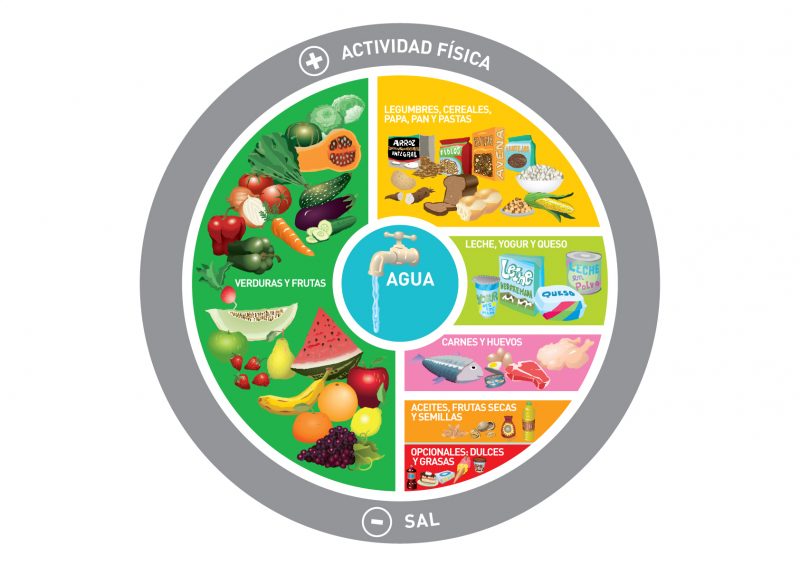
Key 6: Consume milk, yogurt, or cheese daily, preferably low-fat.
- 1st ms: Include 3 servings per day of milk, yogurt, or cheese.
- 2nd tip: When shopping, check the expiration date and choose them at the end of your shopping trip to maintain the cold chain.
- 3rd trimester: Choose soft cheeses over hard ones and those with lower fat and salt content.
- 4th ms: The foods in this group are a source of calcium and are necessary at all ages.
Key 7: When consuming meat, remove visible fat, increase fish consumption, and include eggs.
- 1st ms: The daily portion of meat is represented by the size of the palm of the hand.
- 2nd ms: Incorporate meats with the following frequencies: fish 2 or more times per week, other white meats 2 times per week, and red meats up to 3 times per week.
- 3rd month: Include up to one egg per day, especially if the necessary amount of meat is not consumed.
- 4th ms: Cooking meat until there are no red or pink parts inside prevents foodborne illnesses.
Key 8: Eat legumes, preferably whole grains, potatoes, sweet potatoes, corn, or cassava.
- 1st ms: Combining legumes and grains is an alternative to replacing meat in some meals.
- 2nd ms: For legumes, you can choose peas, lentils, soybeans, beans, and chickpeas. For grains, you can choose brown rice, oats, corn, bulgur wheat, barley, and rye, among others.
- 3rd trimester: When consuming potatoes or sweet potatoes, wash them thoroughly before cooking and cook them with the skin on.
Key 9: Consume raw oil as a condiment, dried fruits, or seeds.
- 1st month: Use two tablespoons of crude oil per day.
- 2nd most important: Choose other cooking methods instead of frying.
- 3rd trimester: If possible, alternate oils (such as sunflower, corn, soybean, high-oleic sunflower, olive and canola).
- 4th ms: Eat a handful of unsalted dried fruits (peanuts, walnuts, almonds, hazelnuts, chestnuts, etc.) or unsalted seeds (chia, sunflower, sesame, flax, etc.) at least once a week.
- 5th month: Crude oil, dried fruits, and seeds provide essential nutrients.
Key 10: The consumption of alcoholic beverages must be responsible. Children, adolescents, and pregnant women should not consume them. Always avoid them when driving.
- 1st slide: Responsible consumption for adults is a maximum of two drinks per day for men and one for women.
- 2nd message: Irresponsible alcohol consumption causes serious harm and health risks.
Source: www.msal.gob.ar
Consult with our specialists
[fc id=’32’ align=’center’][/fc]

