Both are caused by an accumulation of abnormal or excessive body fat, increasing the risk of suffering from heart disease, H.T.A., stroke, diabetes, osteoarthritis, high uric acid, dyslipidemia, metabolic syndrome, uterine body, breast, and colon cancers.
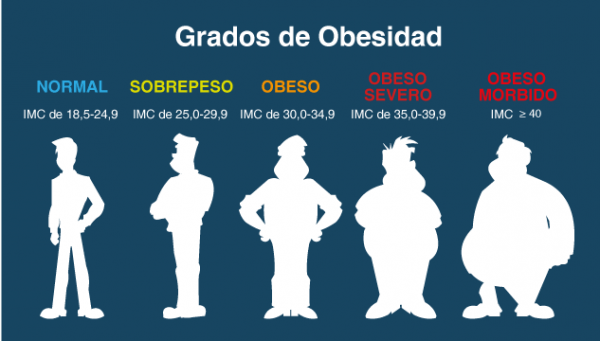
Overweight
Some people in this group may have a lot of muscle weight and therefore not as much fat, as is the case with athletes. In these people, their weight does not represent an associated increase in the risk of health problems.
A body mass index (BMI) of 25.0 to 29.9 is considered overweight.
Obesity
Depending on the location of the total body fat, it can be central and/or gynoid.
According to prognosis (calculating total body mass index):
Weight (kg)
——————–
Height² (mt)
- BMI of 30.0-34.9 is class I obesity.
- BMI of 35.0-39.9 is class II obesity.
- BMI of 40.0 or greater is class III obesity, severe with the presence of at least one or other significant morbidity is also classified as morbid obesity.
But because BMI does not account for differences between adipose and lean tissue, it also does not distinguish between different forms of adiposity, some of which may be more closely associated with cardiovascular risk. Better knowledge of adipose tissue biology has shown that central obesity (male-type or apple-type obesity) has a greater relationship with cardiovascular disease than isolated BMI.
Another way to classify obesity is by taking the absolute waist circumference (>102 cm in men and >88 cm in women) or the waist-hip index (>0.9 for men and >0.85 for women), valid for determining central obesity. Since waist circumference explains obesity-related health risk factors significantly better than BMI when metabolic syndrome was taken as a measure.
Tips for avoiding overweight and obesity
- Lead a healthy life
- Choose foods with reduced sodium, sugar, and trans fat content.
- Stay as long as possible in environments with healthy environments, to be able to make simple choices regarding food and regular physical activity of at least 30 minutes a day.
- Distribute food into 4 meals a day.
- Moderate portion sizes.
- Incorporate legumes, whole grains, seeds and dried fruits.
- Consume 4 to 5 fruits a day.
- Eat vegetables with every meal.
- Limiting alcohol use
- Avoid processed foods.
Dr. Gabriela Tórtolo
Metabolic syndrome specialist
La Posada del Qenti
Consult with our specialists
[fc id=’32’ align=’center’][/fc]